Literary worlds as gathering prompts
Books are uniquely fertile ground for event design because authors spend hundreds of pages detailing atmosphere: the dry scent of calfskin bindings, salt-encrusted deck logs, or the faint click of a manual typewriter in an empty press bureau.
Evoking the reading room instead of the licensed movie
When hosts attempt a literary party, they often purchase licensed plastic trinkets tied to film adaptations. This immediately flattens the imagination. A far richer approach is to recreate the historical or sensory apparatus that surrounds the written word.
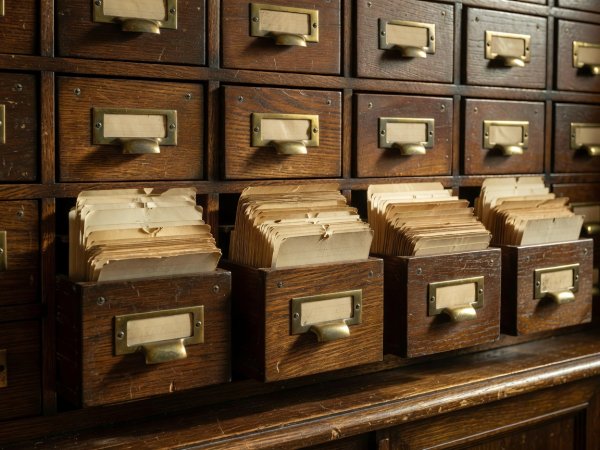
Consider the tactile dignity of real library catalog cards, heavy cast-iron bookends, forest green banker's lamps, and vintage fountain pen ink. By elevating paper weight and typography, you evoke the private contemplation and mystery of antiquarian archives without uttering a single trademarked character name.
Real-world inspiration can be drawn directly from historic reading spaces such as the London Library in St James's Square, the Morgan Library in Manhattan, or the Bodleian in Oxford, where aged oak, brass fixtures, and silent catalog cabinets establish instant gravitas.
The Epistolary Salon: letters, wax, and sealed prompts
In epistolary literature—novels told entirely through missives, telegrams, and ship manifests—physical correspondence is the sole vehicle for drama. You can adapt this mechanism into a participatory gathering where communication happens on paper.
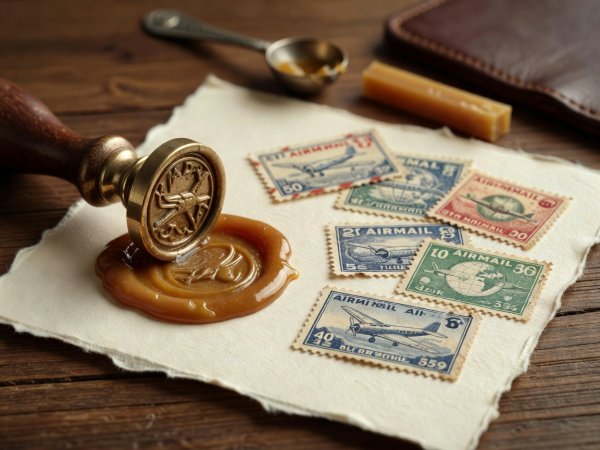
Place antique wooden writing slopes on side tables, stocked with airmail envelopes, sealing wax beads, brass melting spoons, and dipping pens. As guests settle in, they receive sealed wax envelopes containing genuine discussion prompts, fragmentary poems, or character anecdotes excerpted from classic works by Virginia Woolf, Jorge Luis Borges, or Italo Calvino.
This transforms passive spectators into curious correspondents. Guests spend the evening exchanging brief notes or composing communal stories, creating a slow-paced rhythm that digital entertainment can never match.
Curated Table: Literary World Elements
A systematic comparison of literary themes and their physical material expressions.
| Theme Archetype | Material Foundation | Paper & Typography | Lighting Strategy | Guest Activity Prompt |
|---|---|---|---|---|
| Antiquarian Archive | Weathered oak, green baize, dark calfskin, brass rulers | 70gsm laid paper, serif typeface, typewriter ribbon stamps | Low green-glass bankers lamps, warm 2200K filament globes | Searching card catalogs for custom drink formulas |
| Borges Labyrinth | Polished mirrors, obsidian stones, hexagonal wooden tiles | Fine Japanese kozo tissue, geometric sans-serif, blind debossing | Concealed spotlights creating deep shadow geometry | Deciphering interconnected micro-fiction fragments |
| Maritime Voyage | Raw canvas sailcloth, rusted iron weights, rope marline | Foxed ledger sheets, handwritten copperplate script, ink blots | Storm lanterns with storm-glass wind screens | Logging observations into a communal leather logbook |
| Midnight Press Bureau | Steel filing cabinets, linoleum, bakelite rotary dials | Newsprint stock, mono-spaced typewriter font, blue pencil edits | Harsh low-slung industrial enamel pendants | Filing satirical evening bulletins on manual typewriters |