Nature-inspired scenes indoors
The outdoors cannot be summoned by neon plastic vines or printed forest banners. It is recreated through genuine organic density: damp clay, foraged deadfall branches, river stones, and true horticultural specimens.
The Winter Herbarium: dried specimens and pressed botany
While fresh flower arrangements fade rapidly and often look excessively formal, an herbarium theme leans into preservation, taxonomy, and sculptural branch shapes. Drawing cues from historical institutions like the Royal Botanic Gardens at Kew or the Chelsea Physic Garden, this aesthetic honors the quiet structure of dormant nature.
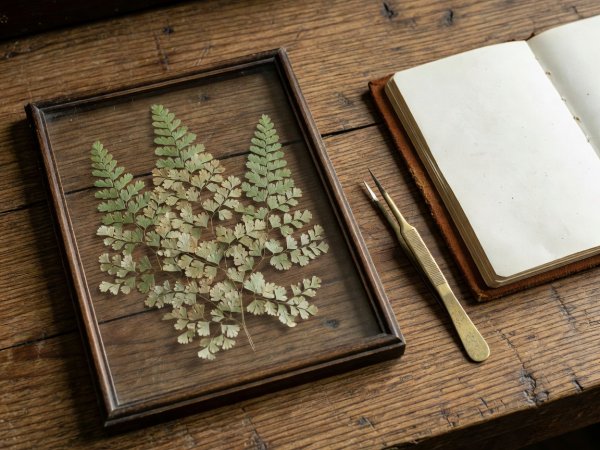
Line long dining tables with heavy glass cloches sheltering dried poppy seed pods, teasel heads, lichen-crusted bark, and pressed maidenhair ferns mounted on ivory cardstock. Accompany the tablescape with handwritten Latin binominals and small brass magnifying glasses for table conversation.
The resulting palette—biscuit, faded lichen silver, deep peat brown, and brass—feels timeless, tranquil, and deeply respectful of organic forms.
Nocturnal Woodland: moss, damp slate, and woodland scent
Another compelling atmospheric direction is the forest floor after dusk. To construct this indoors, eliminate bright primary colours entirely and focus on tactile greens and damp minerals.
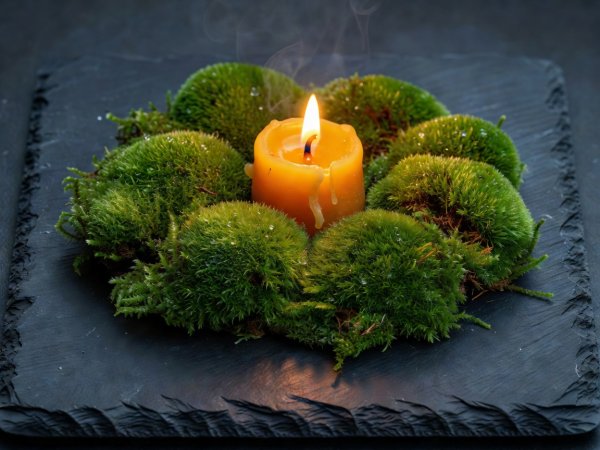
Use large slabs of dark grey slate as serving platters, bedded on live preserved sheet moss (Hypnum cupressiforme) and clean river shingle. Scent plays an overwhelming role in forest perception: unlit cedar shavings, pine resin, and smoked lapsang souchong tea leaves gently warmed in cast iron dishes fill the room with unmistakable outdoor depth.
By keeping room lighting confined to low tallow candles placed directly onto the stone slabs, the boundaries of your apartment dissolve into the soft silhouette of woodland understory.
Tactile Material Guide: Forest & Flora Indoors
Mineral Foundations
River stones, rough slate flagstones, and terracotta saucers create natural ballast and temperature contrast on dining tables without feeling sterile.
Architectural Botany
Select foraged bare dogwood branches, winter hazel, or magnolia twigs in heavy ceramic urns instead of short commercial blossom bouquets. Height creates an indoor canopy.
Aromatic Realism
Avoid synthetic air sprays. Rely on crushed rosemary sprigs, pine cones, peat embers in a brazier, or damp stone misting to activate memories of outdoor dampness.